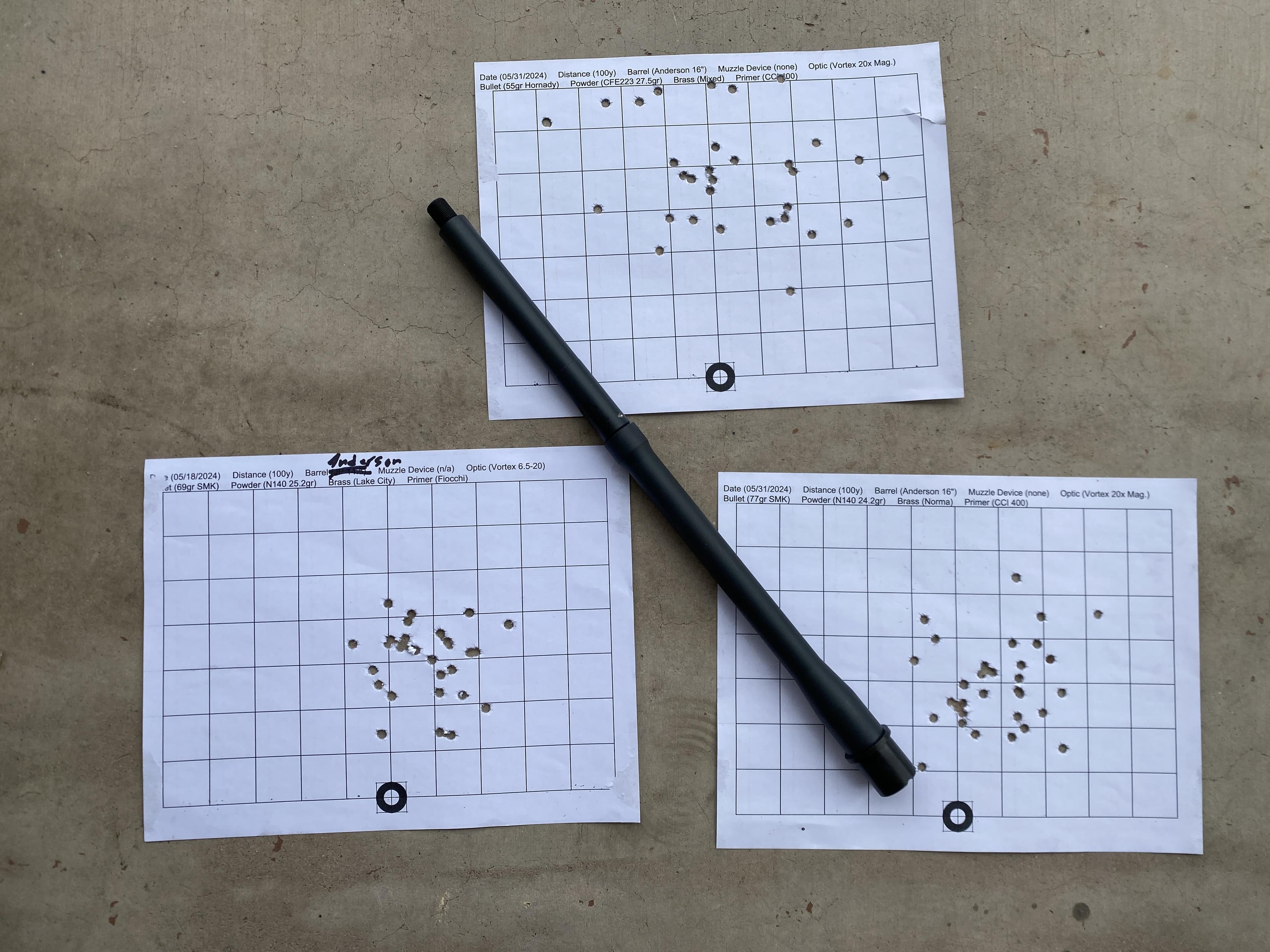
Precision rifle parts laid out on an armorer's bench alongside a target showing tight shot groups.
Pre-LaunchAR-15 Platform

AR-15 Parts Compatibility
Checked Before You Buy

Build My Rifle validates thread pitch, gas systems, barrel journals, and interface dimensions across your entire build. Every part is checked. Every conflict is explained. Every fix is actionable.

Engine

Deterministic

Validation

Real-time

Source

Mil-Spec + MFR data

Cost

Free

What we validate

Six critical interface checks run against every part in your build. Measured constraints, not opinions.

Barrel Extension

Extension type, barrel nut thread

Gas System

Port position, journal diameter, gas length

Handguard

Mounting interface, length clearance

Muzzle Device

Thread pitch, shoulder interface

Buffer System

Tube thread, buffer weight class

BCG

Bolt face, cam pin, gas key

Clear compatibility status

Every part check returns one of three outcomes: Compatible, Incompatible, or Needs Review. No ambiguity. No silent failures.

Each result includes the constraint rule, the measured values, and a remediation path so you know exactly what to fix and why.

Compatibility Report
SAMPLE
AR-15 / 5.56 NATO / 16" Mid-Length

Gas block journal

Incompatible
SEL 0.875"REQ 0.750"

Muzzle thread

Compatible
SEL 5/8-24REQ 5/8-24

Handguard length

Needs review
SEL 13.7"REQ <= 13.5"

Buffer tube thread

Compatible
SEL Mil-SpecREQ Mil-Spec

4 checks / 1 conflict / 1 review

How it works

A three-step workflow built around measurable constraints. Define your build, select parts, validate everything.

01
01
Define your build

Set platform, caliber, barrel length, and role. Every downstream constraint flows from here.

02
02
Select parts

Choose components from the catalog. Interface rules and dimensional checks are enforced in real time.

03
03
Validate and build

Review your full compatibility report. Fix conflicts with guided remediation before checkout.

Frequently asked questions

Common compatibility questions from AR-15 builders.

How do I know if AR-15 parts are compatible?

Build My Rifle checks dimensional constraints, interface specifications, and system dependencies between every part in your build. Thread pitch, gas block journal diameter, barrel extension type, handguard mounting interface, and buffer system compatibility are all validated automatically.

What is the difference between mil-spec and commercial buffer tubes?

Mil-spec buffer tubes have a 1.146" outer diameter with a specific thread pitch (1-3/16"-16). Commercial buffer tubes are slightly larger at 1.168" with a different thread. The two are not interchangeable — a mil-spec stock will not fit a commercial tube and vice versa. Build My Rifle catches this mismatch automatically.

Will a .750 gas block fit a .625 barrel journal?

No. The gas block inner diameter must match the barrel journal diameter at the gas port. A .750" gas block on a .625" pencil-profile barrel will not seat or seal properly. Build My Rifle flags this as incompatible and shows the exact dimensional mismatch.

What parts do I need to build an AR-15?

A complete AR-15 build requires a stripped lower receiver, lower parts kit, buffer tube assembly, stock, upper receiver, barrel, gas block, gas tube, handguard, bolt carrier group, charging handle, and muzzle device. Build My Rifle validates compatibility across all of these components.

Does barrel length affect gas system compatibility?

Yes. Barrel length determines which gas system lengths are viable. A pistol-length gas system is typical for barrels under 10", carbine-length for 10"-14.5", mid-length for 14.5"-18", and rifle-length for 18"+. Build My Rifle validates gas system length against barrel length and port position.

Get early access

Join the waitlist for first access when Build My Rifle launches. Builder updates only — no generic newsletters.

Platform

AR-15

Checks

6 interface types

Pricing

Free